Cheat sheet · Repair
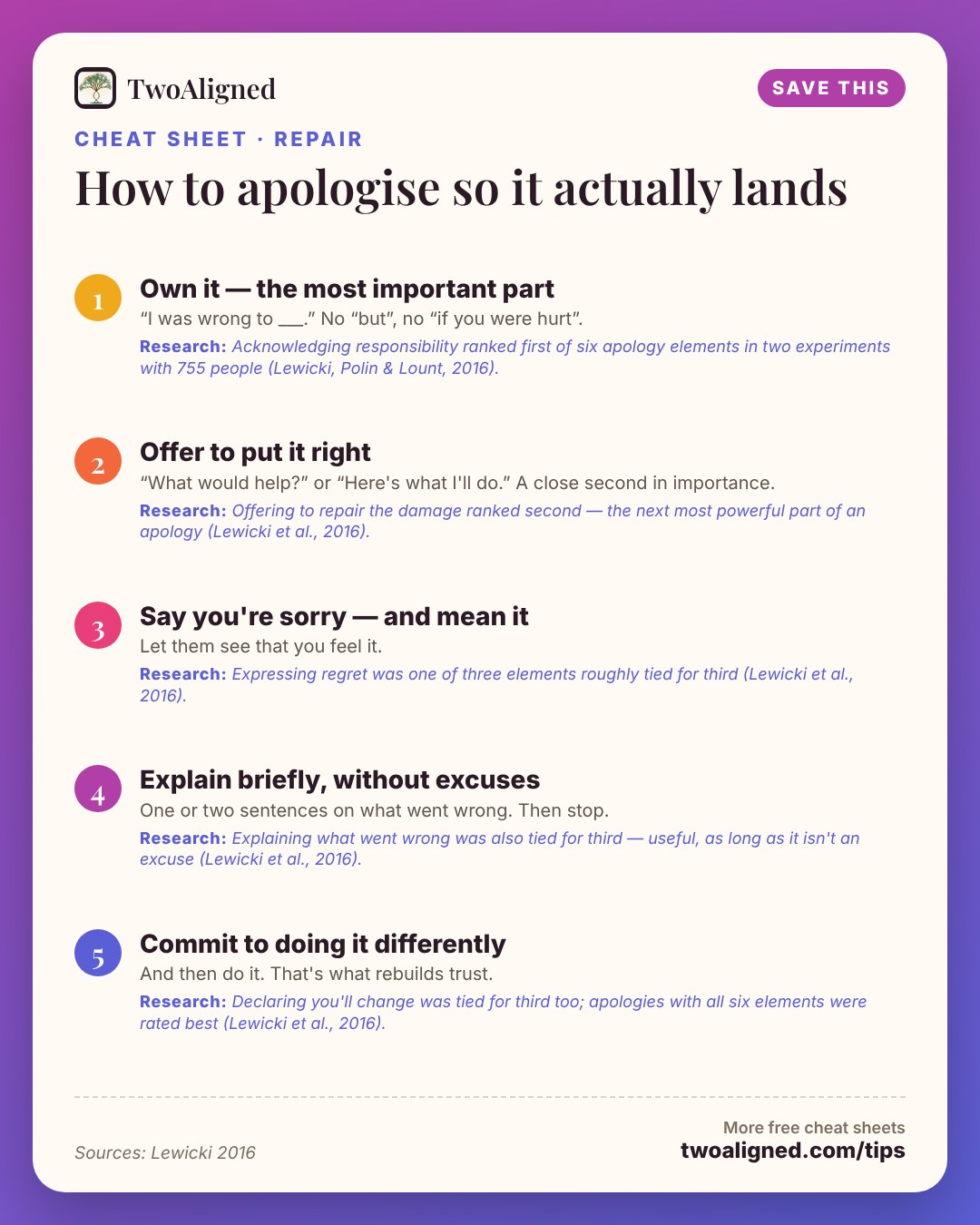
How to apologise so it actually lands
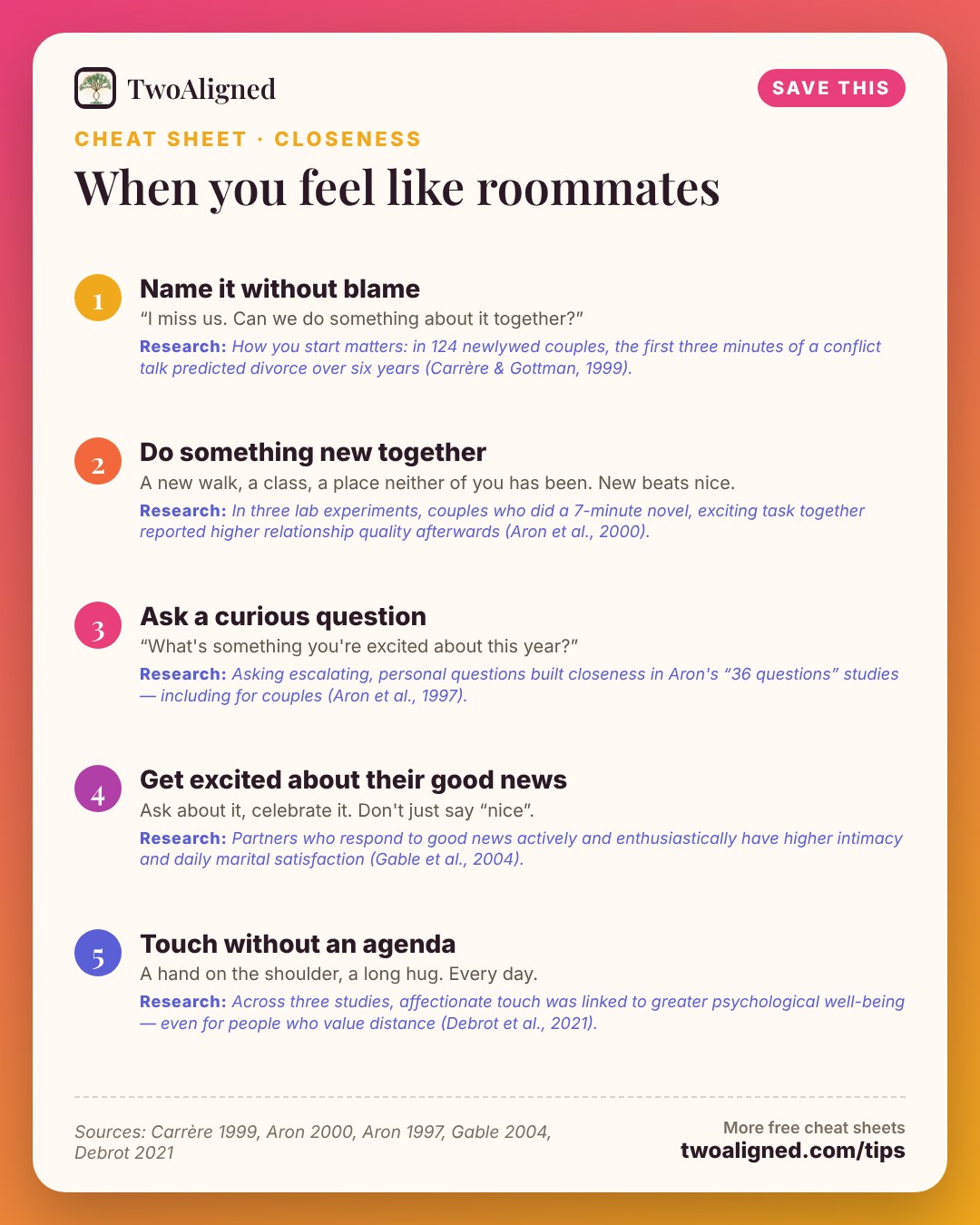
A rushed “sorry” can make things worse. Research has found which parts of an apology matter most — and which one you can leave out.
- 1
Own it — the most important part
“I was wrong to ___.” No “but”, no “if you were hurt”.
ResearchAcknowledging responsibility ranked first of six apology elements in two experiments with 755 people (Lewicki, Polin & Lount, 2016).
- 2
Offer to put it right
“What would help?” or “Here's what I'll do.” A close second in importance.
ResearchOffering to repair the damage ranked second — the next most powerful part of an apology (Lewicki et al., 2016).
- 3
Say you're sorry — and mean it
Let them see that you feel it.
ResearchExpressing regret was one of three elements roughly tied for third (Lewicki et al., 2016).
- 4
Explain briefly, without excuses
One or two sentences on what went wrong. Then stop.
ResearchExplaining what went wrong was also tied for third — useful, as long as it isn't an excuse (Lewicki et al., 2016).
- 5
Commit to doing it differently
And then do it. That's what rebuilds trust.
ResearchDeclaring you'll change was tied for third too; apologies with all six elements were rated best (Lewicki et al., 2016).
Why this works
Researchers at Ohio State tested six parts of an apology. The most important was acknowledging responsibility; the second was offering to repair. The least important was asking for forgiveness — the lead researcher called it the one you can leave out (Lewicki, Polin & Lount, 2016).
Sources
These are the general steps. Want advice for your situation?
Take the free 2-minute quiz for a first read on what's really going on between you two.
Take the free quiz →