Cheat sheet · Closeness
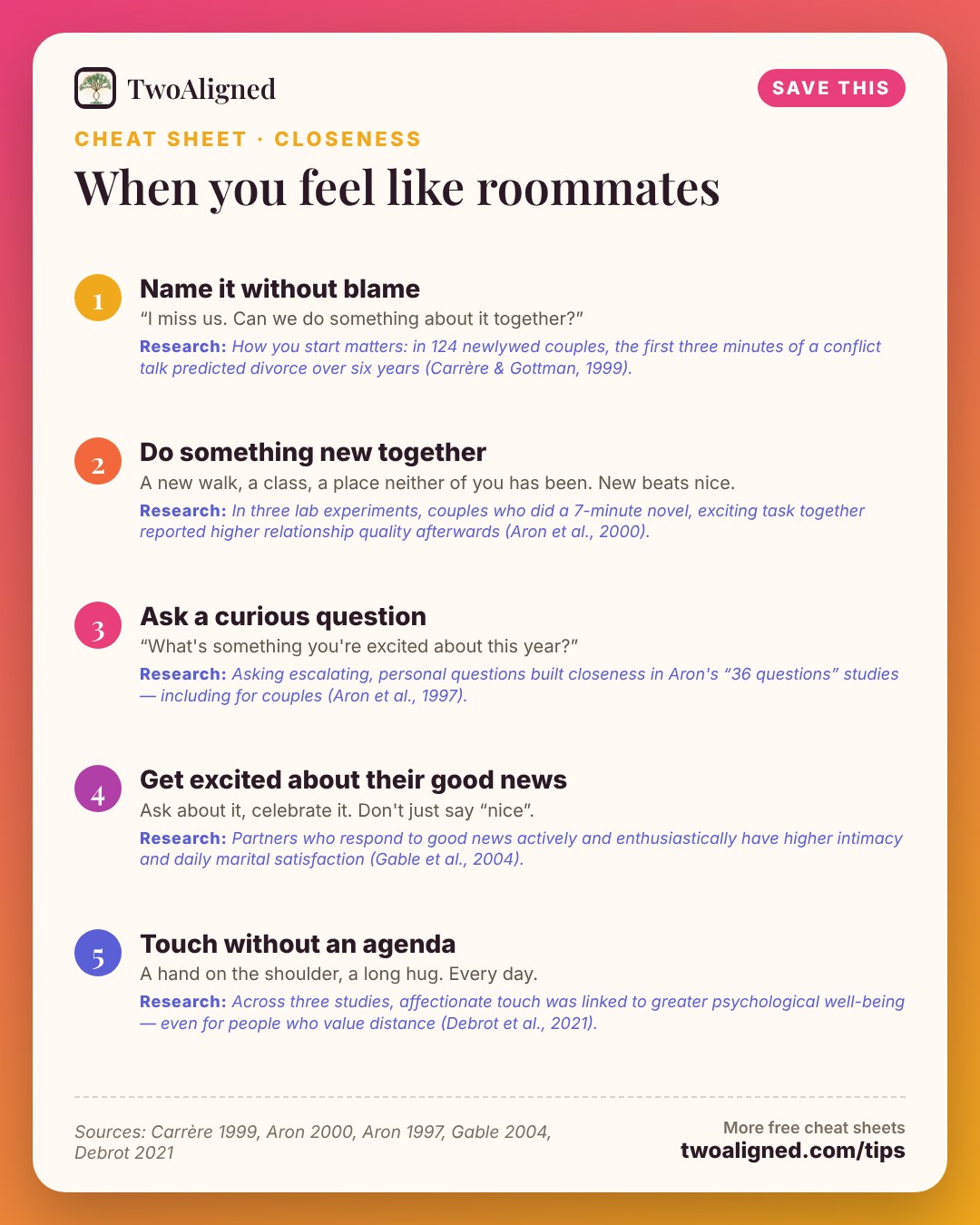
When you feel like roommates
Logistics, chores, kids, screens — and somewhere in there, you two. If the spark has gone quiet, these steps bring the “us” back.
- 1
Name it without blame
“I miss us. Can we do something about it together?”
ResearchHow you start matters: in 124 newlywed couples, the first three minutes of a conflict talk predicted divorce over six years (Carrère & Gottman, 1999).
- 2
Do something new together
A new walk, a class, a place neither of you has been. New beats nice.
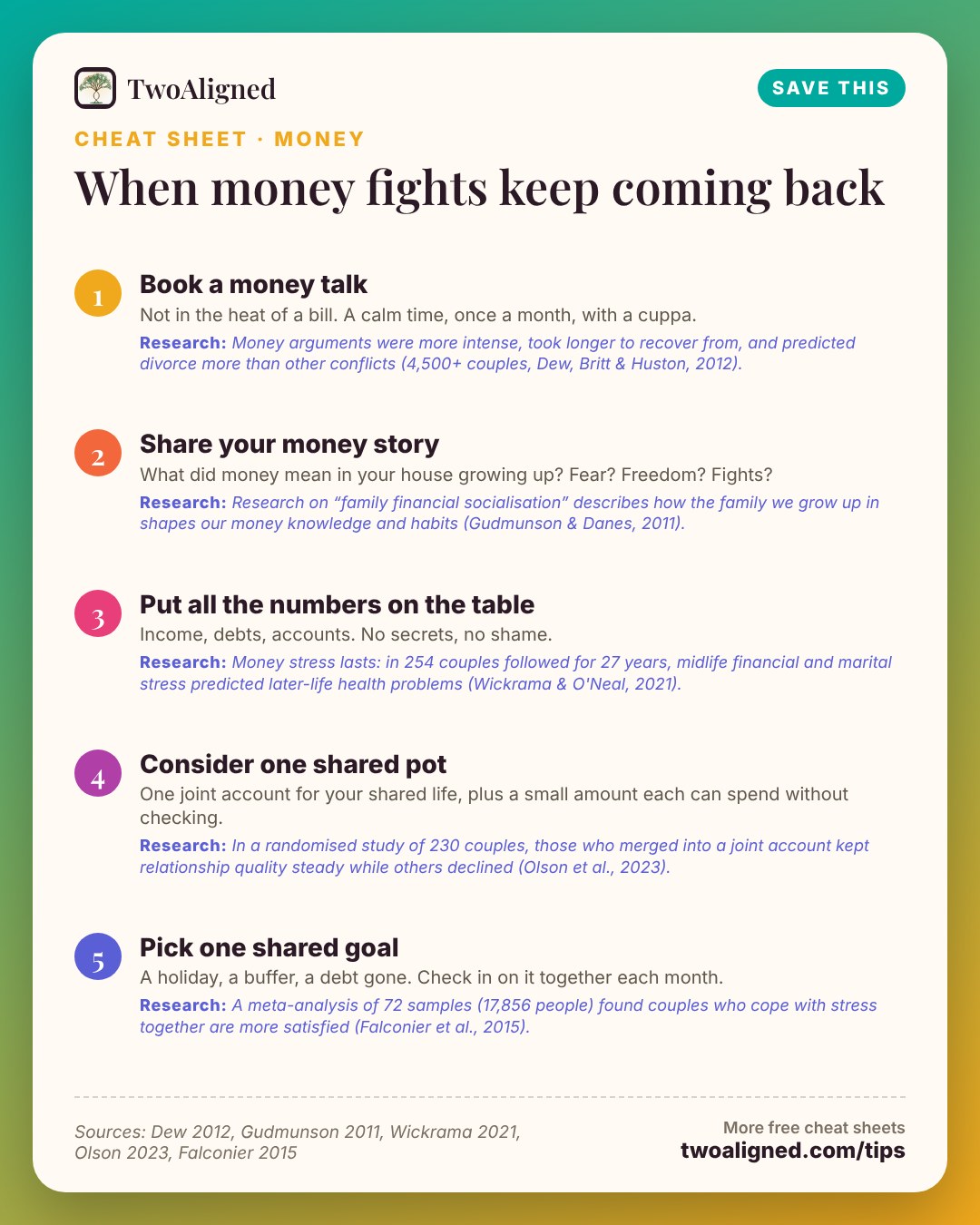
ResearchIn three lab experiments, couples who did a 7-minute novel, exciting task together reported higher relationship quality afterwards (Aron et al., 2000).
- 3
Ask a curious question
“What's something you're excited about this year?”
ResearchAsking escalating, personal questions built closeness in Aron's “36 questions” studies — including for couples (Aron et al., 1997).
- 4
Get excited about their good news
Ask about it, celebrate it. Don't just say “nice”.
ResearchPartners who respond to good news actively and enthusiastically have higher intimacy and daily marital satisfaction (Gable et al., 2004).
- 5
Touch without an agenda
A hand on the shoulder, a long hug. Every day.
ResearchAcross three studies, affectionate touch was linked to greater psychological well-being — even for people who value distance (Debrot et al., 2021).
Why this works
In a study following 123 couples, boredom in year seven of marriage predicted lower satisfaction nine years later — through a loss of closeness (Tsapelas, Aron & Orbuch, Psychological Science). The suggested remedy: doing new and exciting things together.
Shelly Gable's research found that responding to a partner's good news with active, genuine enthusiasm is linked to more intimacy and greater daily satisfaction.
Sources
- All the research behind TwoAligned
- Carrère & Gottman (1999), Family Process — the first three minutes predict divorce
- Aron et al. (2000), Journal of Personality and Social Psychology — novel and arousing shared activities
- Aron et al. (1997), Personality and Social Psychology Bulletin — the 36 questions (UC Berkeley Greater Good)
- Gable et al. (2004), Journal of Personality and Social Psychology — sharing good news
- Debrot et al. (2021), Personality and Social Psychology Bulletin — touch and well-being
- University of Michigan — boredom can hurt a marriage (2009)
- Gable et al. (2004) — What do you do when things go right?
- Overall et al. — direct, positive requests and lasting change (Psychology Today)
- Grewen et al. — warm partner contact and blood pressure (UNC)
These are the general steps. Want advice for your situation?
Take the free 2-minute quiz for a first read on what's really going on between you two.
Take the free quiz →